
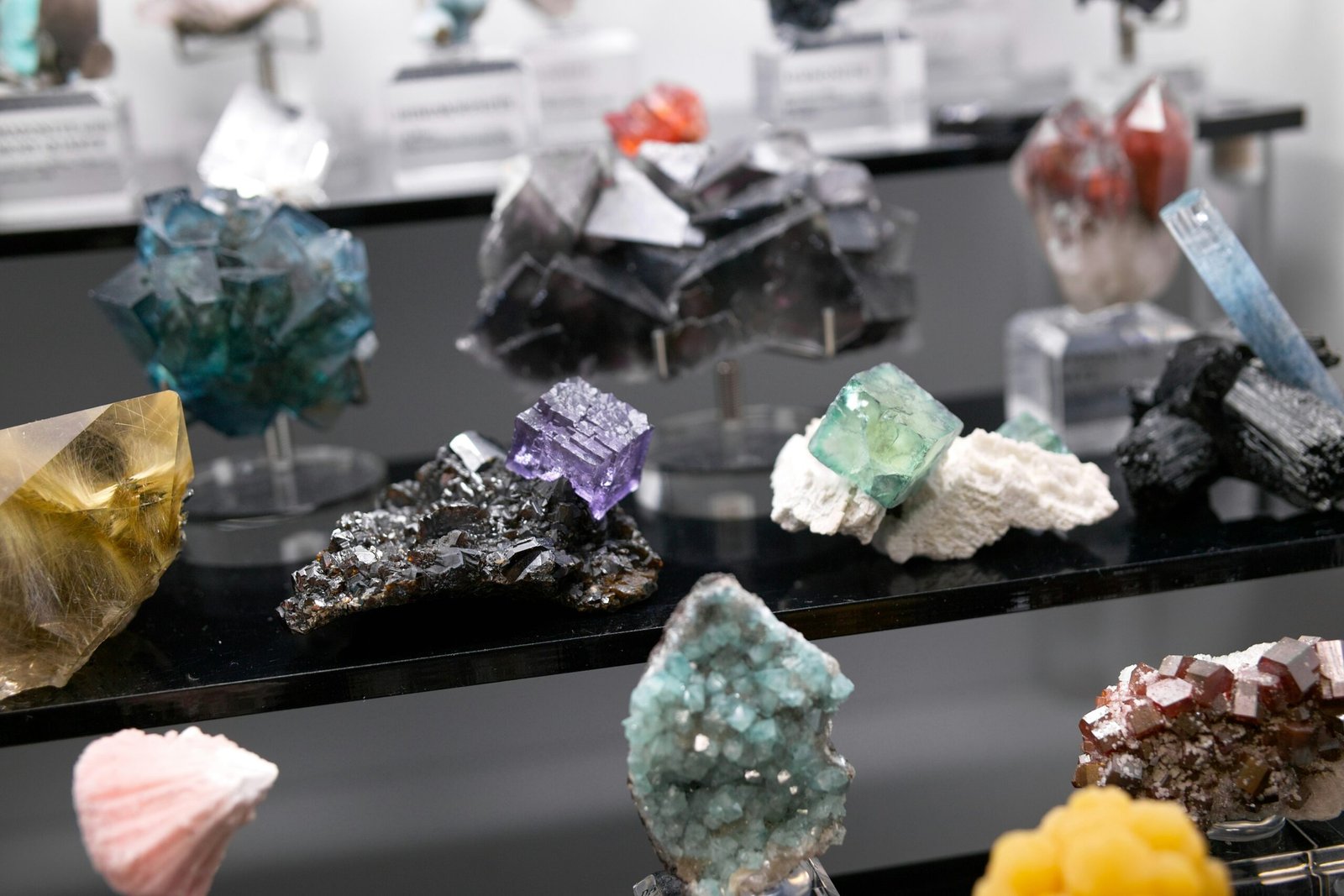
Quartz
Quartz is one of the most abundant and versatile industrial minerals, widely valued for its exceptional hardness, chemical stability, and high resistance to heat and corrosion. Due to its high silica content and purity, quartz is extensively used in industries such as glass manufacturing, ceramics, construction, electronics, metallurgy, paints, coatings, and engineered stone production. In glass and ceramic applications, quartz enhances transparency, strength, and thermal durability.
Quartz is also a critical raw material in the electronics and semiconductor industries, where high-purity quartz is used for silicon production, optical fibers, and precision components. In foundries and metallurgical processes, it serves as a refractory material and flux, ensuring dimensional accuracy and thermal stability.
Quartz – Technical Specifications
| Parameter | Specification |
|---|---|
| Chemical Composition | Silicon Dioxide (SiO₂) |
| SiO₂ Content | 98% – 99.9% (Grade dependent) |
| Color | White / Off-white / Transparent |
| Crystal Structure | Trigonal (Hexagonal system) |
| Mohs Hardness | 7 |
| Specific Gravity | 2.60 – 2.65 |
| Melting Point | ~1710°C |
| Thermal Stability | Excellent |
| Refractive Index | 1.544 – 1.553 |
| Water Absorption | Negligible |
| Chemical Resistance | Resistant to acids (except HF) |
| Moisture Content | ≤ 0.5% |
| Particle Size Range | 100 mesh – 10 mm (customizable) |
| Bulk Density | 1.4 – 1.6 g/cm³ |
| Packaging | 25 kg / 50 kg bags or jumbo bags |
| Applications | Glass, Ceramics, Foundry, Construction, Electronics, Paints, Plastics |